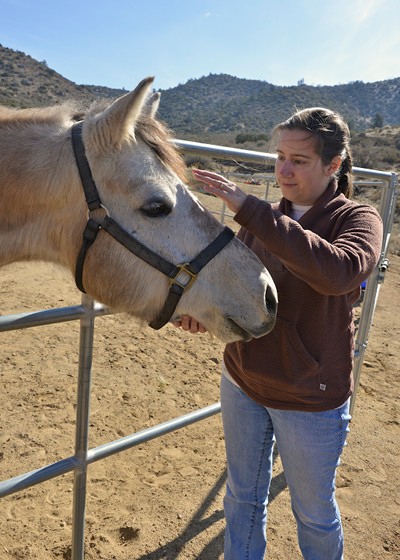
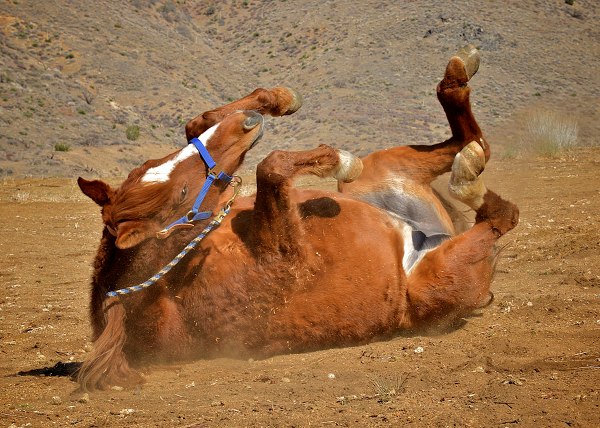
Photo by Charles Hood
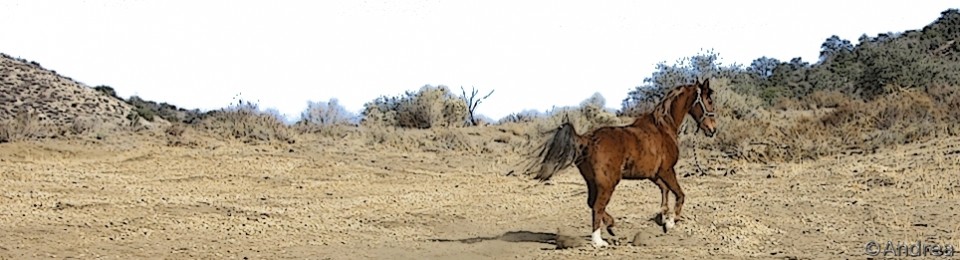
26 Tuesday Feb 2013
Posted in Text-Free Tuesday
Photo by Charles Hood
22 Friday Feb 2013
Posted in Feeding
In the wild, horses forage, which means they eat grasses—including some that form seed-heads, like oats—as well as the tender young sprouts of plants, bushes, and occasionally trees. Sometime after humans domesticated horses, they realized they had to do something for the lean seasons, when the grass was covered with snow or otherwise unavailable. Eventually they figured out how to cut it, dry it, and bale it—round bales, rectangular bales, big bales, little bales. Grass hay remains the staple horse feed to this day. Almost everything about the horse, from his teeth to his fear of wind, evolved because he eats grass.
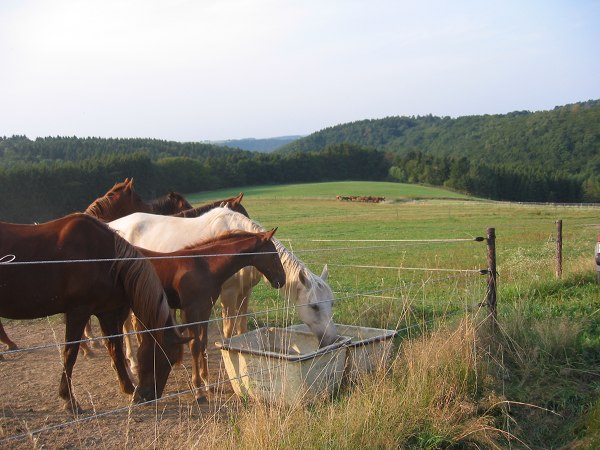
In climates with plenty of rainfall, like parts of Germany, horses can and do live on pasture grass—at least during the summer.
19 Tuesday Feb 2013
15 Friday Feb 2013
Posted in Behavior
As Tuesday’s photo illustrated, horses can do things that look very strange—even frightening—to their two-legged owners.
The horse in the photo was yawning, but some owners will never see it happen. That’s because most horses very seldom yawn. The first time you see the behavior, you might mistake it for a seizure of some kind. The horse’s eyes roll back, his ears flop, and he opens his mouth wide enough to let his tongue hang out. The first time I saw a horse do that I was poised to run to the house and scream at my husband to “call the veterinarian!” Luckily the horse closed his mouth, chewed a little, and wandered off.
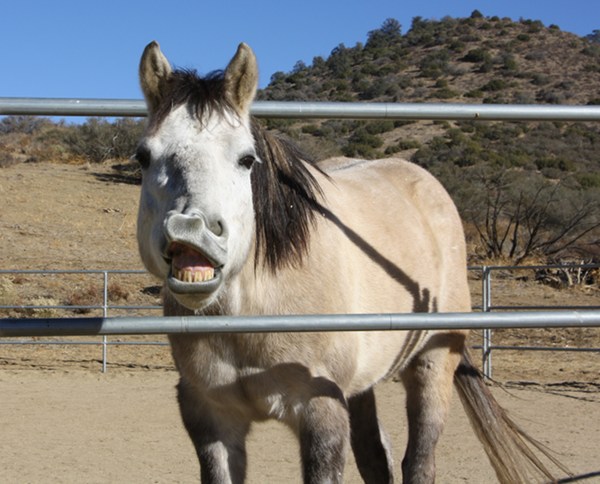
Gunsmoke exhibiting a flehmen response.
09 Saturday Feb 2013
Posted in General
A lot of people keep stuff (any old stuff) around the house because they think “it might come in handy someday.” It probably won’t. That’s why women of my mother’s generation believed so fervently in that ritual known as spring cleaning, when they took a good, hard look at all the stuff they had accumulated since the previous spring, and trashed 99% of it.

My tackroom hasn’t looked this neat since I photographed it for my Backyard Horsekeeping book.
07 Thursday Feb 2013
Posted in General
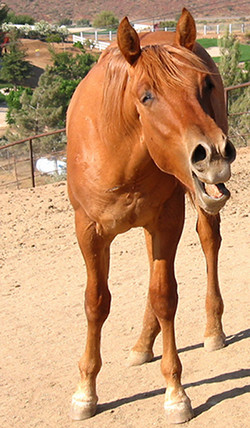
Is this horse yawning or choking? Before you call the vet, check your horse’s vital signs. (He’s yawning.)
An old saying offers this gem of insight: “You get what you pay for.” Here’s another, even better (or worse) example: “A woman, a dog, and a walnut tree/ The more you beat them the better they’ll be.” Sometimes old sayings can have more in common with costume jewelry than real gemstones.
A couple of nights ago, horse owners in the small town where John and I live, in addition to horse owners in a nearby town, all congregated at our library to hear a local veterinarian discuss “Emergency Health Care,” otherwise known as, “What can I do to help my horse until the vet arrives?” The room was too small. The librarian had set out 75 chairs, and somebody was sitting in all of them. Others sat on the floor with their backs to the wall. Total number in the audience: 83 people. It’s one of the biggest turnouts the library has ever seen—and it was free.
02 Saturday Feb 2013
Posted in Weather
Since I seem to be on a weather kick lately, I’ll stay on it long enough to discuss blankets. It’s a subject I feel strongly about, because for most horse owners, in most situations, horse blankets are a waste of money.
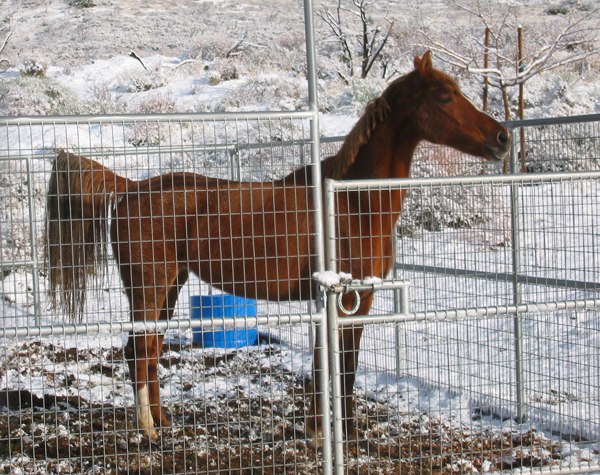
This is a mountain horse. Do you see a winter blanket on her?
31 Thursday Jan 2013
Posted in General
Fire is one of the biggest drawbacks to living out West because it takes so little to set one off. A live cigarette butt carelessly tossed out of a car window. A not-quite-OSHA-approved lawnmower and a stray spark. A little kid playing with matches, as most little kids like to do. In the 14 years John and I have lived here, we’ve been evacuated twice, and believe me, it’s not fun—especially when there’s no guarantee that you will ever see your home again.
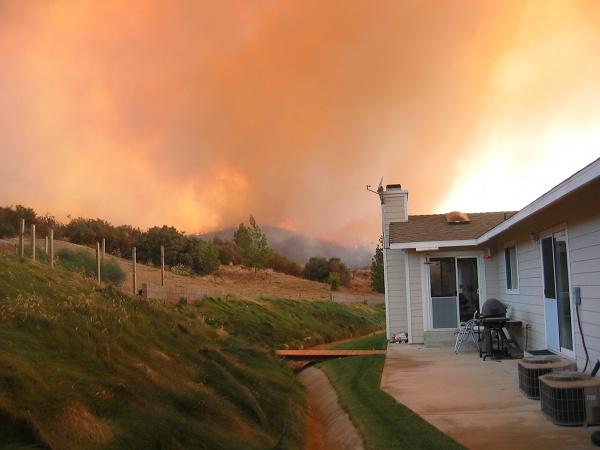
Watching the fire approach our house.
29 Tuesday Jan 2013
Posted in Text-Free Tuesday
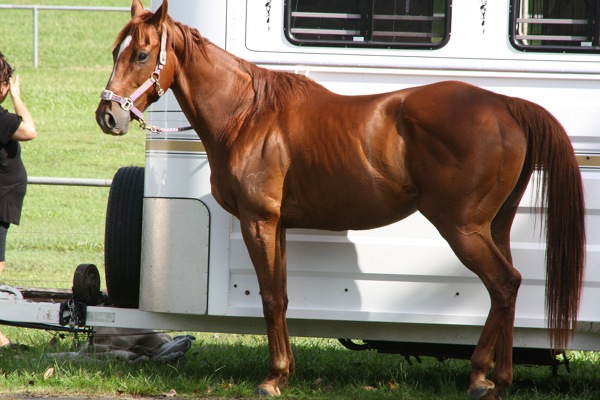
This is a nicely-bred Australian horse, probably a Thoroughbred hunter/jumper. As in the United States, horses are not native to Australia.
26 Saturday Jan 2013
Posted in Weather
When I woke up this morning, it was snowing so hard and fast I could barely see the garden gate. While not exactly a whiteout, it was close. Since I was in no rush to feed the horses—I have deadlines to meet—I fed the dogs and cats and went to work. By the time I went out to feed and clean, the snow had melted and the sky was a brilliant, cloudless blue.

 Backyard Horsekeeping